The NO FAKES Act and the Emerging Federal Framework for Digital Identity
Artificial intelligence is doing more than changing how businesses create brands. It is forcing lawmakers to reconsider whether existing intellectual property laws remain sufficient, leading to proposals for entirely new legal protections.
AI Has Created a New Intellectual Property Challenge
Perhaps one of the most significant questions raised by artificial intelligence is this:
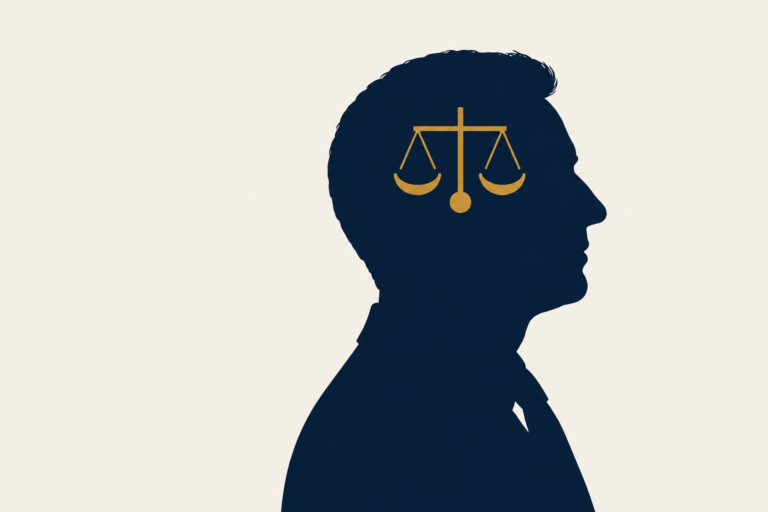
Who owns your identity in the age of AI?
For decades, intellectual property law has protected creations of the mind through distinct legal frameworks.
- Copyright protects original creative works.
- Trademark law protects brands and source identifiers.
- Rights of publicity protect an individual’s name, image, and likeness—but those protections vary considerably from state to state.
Generative AI is exposing the limits of these traditional legal frameworks.
Today’s technology can convincingly replicate a person’s voice, facial expressions, appearance, and mannerisms with remarkable realism, often making it difficult to distinguish authentic content from AI-generated imitations. Existing laws were largely developed before these capabilities existed and were never designed to address the widespread creation and distribution of highly realistic digital replicas.
As artificial intelligence continues to become integrated into branding practices, lawmakers, courts, businesses, and creators are increasingly confronting a fundamental question:
Should a person’s identity receive its own form of federal intellectual property protection?
SCIO Spotlight
H.R. 8915: The Push for Federal Protection of Digital Identity
One of the most significant recent developments in intellectual property law is H.R. 8915, the NO FAKES Act of 2026. Introduced on May 20, 2026, the proposed legislation would establish a federal legal framework protecting individuals against the unauthorized AI-generated use of their voice and visual likeness.
With this legislative proposal, Congress is considering a more uniform national approach that would replace the current patchwork of state right-of-publicity laws—which vary significantly across the country—with a federal framework recognizing an individual’s identity as a protectable legal and commercial asset.
Importantly, the proposal extends well beyond celebrities and public figures. The same technologies capable of realistically imitating a famous performer can also impersonate business executives, employees, political candidates, students, consumers, and private individuals. As generative AI becomes increasingly realistic and accessible, protecting identity is emerging as a broader societal and business concern—not simply an entertainment industry issue.
The legislation also seeks to balance these new protections with longstanding constitutional principles by preserving exceptions for legitimate news reporting, commentary, criticism, parody, and other expressive works. At the same time, it would establish enforcement mechanisms designed to address the online distribution of unauthorized digital replicas while encouraging responsible platform practices.
Rather than merely expanding existing copyright or trademark law, the proposal recognizes that rapidly advancing artificial intelligence presents legal challenges that traditional intellectual property doctrines were never designed to address.
What Is a “Digital Replica”?
H.R. 8915 defines a qualifying digital replica, in part, as:
“…newly created, computer-generated, highly realistic electronic representation…”
Although the legislation focuses on digital replicas, its significance extends well beyond AI-generated videos or celebrity voices. It reflects a growing recognition that artificial intelligence is blurring longstanding legal distinctions among copyright, trademark, rights of publicity, privacy, licensing, contract law, and unfair competition.
As AI systems become increasingly capable of generating convincing human likenesses, voices, performances, endorsements, and other expressive content, lawmakers are evaluating whether entirely new forms of intellectual property protection may be necessary.
Support for the legislation spans creator organizations, technology companies, entertainment industry groups, and media organizations, reflecting a growing consensus that AI governance should protect both innovation and individual identity.
At the same time, the proposal has sparked important debate over where those legal boundaries should be drawn and how they can be balanced with free expression and technological advancement.
Whether the NO FAKES Act ultimately becomes law or continues to evolve, one conclusion is becoming increasingly clear:
Artificial intelligence is not simply changing how intellectual property is created and commercialized—it is changing the legal framework that protects it.
SCIO Perspective
As artificial intelligence expands the scope of intellectual property law, businesses that anticipate these legal developments today will be better positioned to protect their brands, creative works, and long-term competitive advantages tomorrow.